
Discover how clip-on lenses for smartphone cameras help content creators expand their creative boundaries and whether the limitations of this accessory will be an obstacle in 2025.
In 2025, you no longer need to spend thousands of dollars or hire a professional team to create your digital content. Your smartphone is now more than capable of handling most content creation tasks for social media.
Most people in the content creation community will confirm this. While today’s smartphones are quite powerful, they still have fixed lenses due to physical constraints, which can limit creative flexibility. To stand out from the crowd of creators, you need that flexibility.
In 2025, there will be a wide range of accessories, such as clip-on lenses for smartphone cameras, that are compact, significantly improve image quality, and allow creators to shoot cinema-quality videos directly with their mobile devices. Let’s take a closer look at them individually.
Types of Lenses for Smartphone Cameras
Wide-angle: Many shots require content creators to capture as much as possible in their images. Clip-on lenses can be helpful here. These lenses are ideal for vlogging in tight spaces or landscapes and mimic the field of view of a standard lens for mirrorless cameras. There are many options to choose from, such as those from Neewer and similar brands.
Macro: These lenses are the opposite of wide-angle and are excellent for still images and close-ups, as they preserve texture and detail. Such smartphone camera lenses are one of the best options for anyone looking to upgrade their smartphone accessories, as still images with these lenses are very convenient and deliver professional results.
Fisheye lens: This lens goes beyond the wide-angle lens and offers an ultra-wide field of view, but with an artistic fisheye effect. These lenses are popular among content creators and frequently used in creative videography where immersive shots are needed. Think of any popular hip-hop video on YouTube; it likely includes some shots taken with this lens.
Anamorphic: Once only available in Hollywood and the film industry, this lens category has been available for smartphones since 2025 and is quite affordable. These lenses perfectly reproduce the cinematic widescreen format with characteristic, differently colored lens flares on smartphones, conveying the feel of a typical film scene.
Limitations of Smartphone Camera Lenses
Although the lenses mentioned above expand creative boundaries and improve image quality, a classic mirrorless camera with a powerful lens remains irreplaceable, especially considering other factors such as working in low light, professional standards, and other aspects. Smartphones are known to heavily compress details and do not preserve the natural details of an image. Here, an affordable but powerful camera lens can be the best choice.
Specialized Lens > Smartphone Lens
It is a fundamental fact that the quality of photo and video recordings is directly proportional to the amount of light captured by the camera lens. Mobile camera lenses are significantly smaller than APS-C, full-frame, or even medium format sensors and therefore capture less light, which affects image quality.
Furthermore, a dedicated camera system makes more sense for content creators as it reduces the compromises of a smartphone. Additionally, the natural bokeh and creamy subject separation you achieve with traditional lenses are not comparable to smartphones, which use computational blur in portrait mode that is not professional.
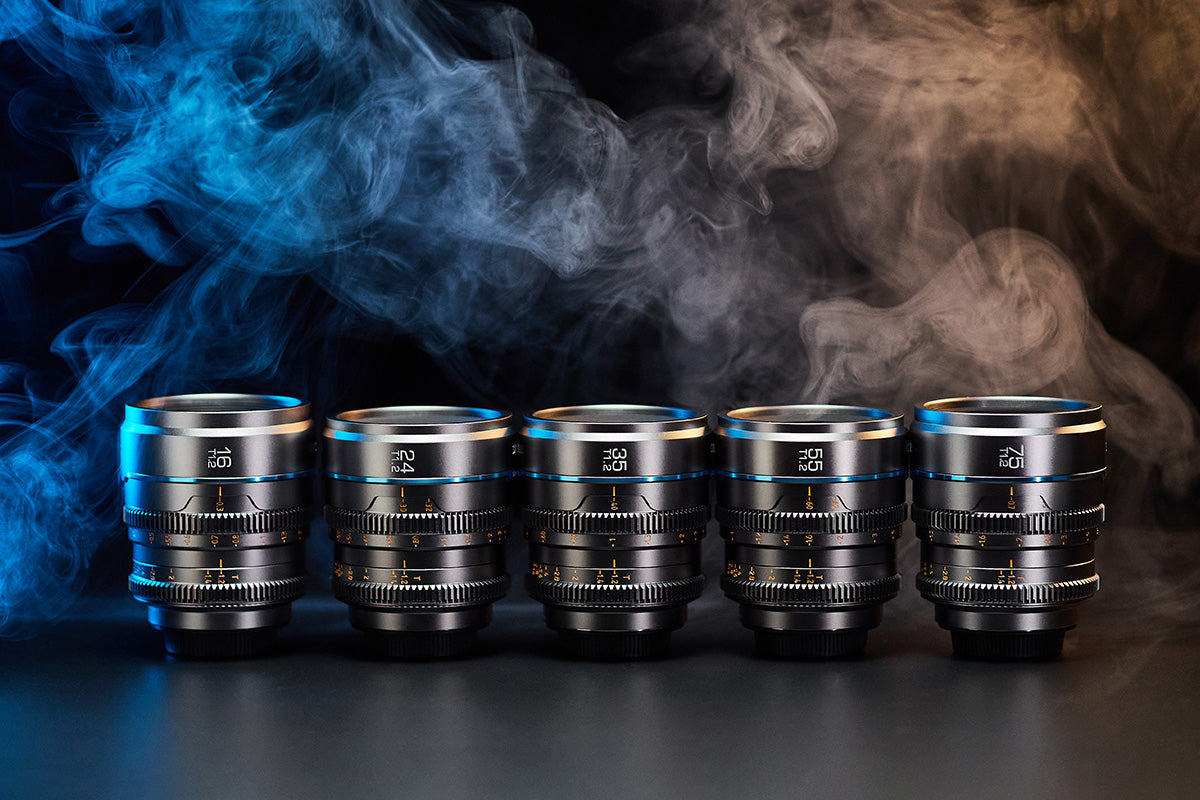
If you want professional quality for photos and videos without breaking your budget, the SIRUI Night Walker T1.2 lens series is an excellent investment in 2025. If you want to upgrade your smartphone with these mobile camera lenses, we recommend saving for a cine lens instead, as the flat design, high-quality natural bokeh, ultra-high-resolution low-light shots with dreamy light flares, and compatibility with a variety of mounts are hard to beat.
You also get a fast T1.2 aperture that can compete with many smartphone lenses in low-light performance. Content creators will also miss focus rings and manual aperture on smartphones. If size matters to you, the lightweight aluminum construction with mobile rigs for shooting on the go is the right choice.
In summary: If you are a serious content creator, a dedicated camera system with a SIRUI T1.2 Night Walker lens is the best investment to gain these professional advantages over smartphones, with or without additional lenses.


