
What is a macro lens and is investing in macro lenses worth it? Read this article to learn everything about this special type of lens and find out if it will still be relevant in 2025.
Some people love capturing nature from a broader perspective – hence landscape, street, and city photography. Others admire nature in the small things that the naked eye cannot see, like the delicate patterns on a butterfly’s wings or the texture of a flower petal. This is where macro photography and macro lenses come into play.
What is a macro lens?
It is a special lens that can capture small details invisible to the naked eye. With these lenses, you can see tiny details so clearly that they appear life-size on the camera sensor, as if they were actually large, even though they are not.
And the details of the subject remain in exceptional quality. This allows photographers to capture the smallest details with extraordinary clarity even at very close distances (minimum focusing distance, MFD) to the lens, without losing
focus. What is the reproduction ratio of a macro lens?
A typical macro lens features special optical elements and floating elements that achieve a reproduction ratio of 1:1 or a 1.0x magnification. This means the subject appears life-size on the camera sensor. Even higher-end macro lenses can make the subject appear larger than a 1:1 reproduction ratio.
To understand this 1:1 reproduction ratio, consider a 30 mm object viewed through a macro lens on a mirrorless camera. This 30 mm object almost completely fills the 36 mm x 24 mm image area of a DSLR camera, leaving only 6 mm remaining.
Some macro lenses are designed for a 1:2 reproduction ratio, meaning the subject can only be shown at half its original size. Nowadays, a 1:1 reproduction ratio is more common with high-resolution image sensors, as these can crop the photo later without significant quality loss to achieve even better magnification. Professionals still prefer a 1:1 macro lens magnification to retain high detail rather than cropping photos.
Macro photography tips you should know
First, always invest in a high-quality and stable tripod for clear, shake-free shots. Also, rely on manual focus, as autofocus reaches its limits at high magnifications with macro lenses (especially entry-level and mid-range lenses). Additionally, invest in a flash diffuser that can handle striking subjects and overall challenging lighting conditions.
With such magnified views, your camera lens should be set to higher apertures like f/8 or f/11 to keep the subject sharp. This provides more clarity but requires longer shutter speeds and lets more light into the frame.
Should you buy a macro lens in 2025?
If your current creative vision involves capturing high-resolution photos with the smallest details and precision, investing in a macro lens makes sense. Moreover, many marketers now use macro lenses to add more dimension to their ultra-wide content.
Well-known content creators on YouTube and Instagram use such lenses to showcase close-ups and videos of products, food, and even jewelry. Macro lenses are seeing increasing demand in 2025 and are becoming a staple of commercial and creative tools.
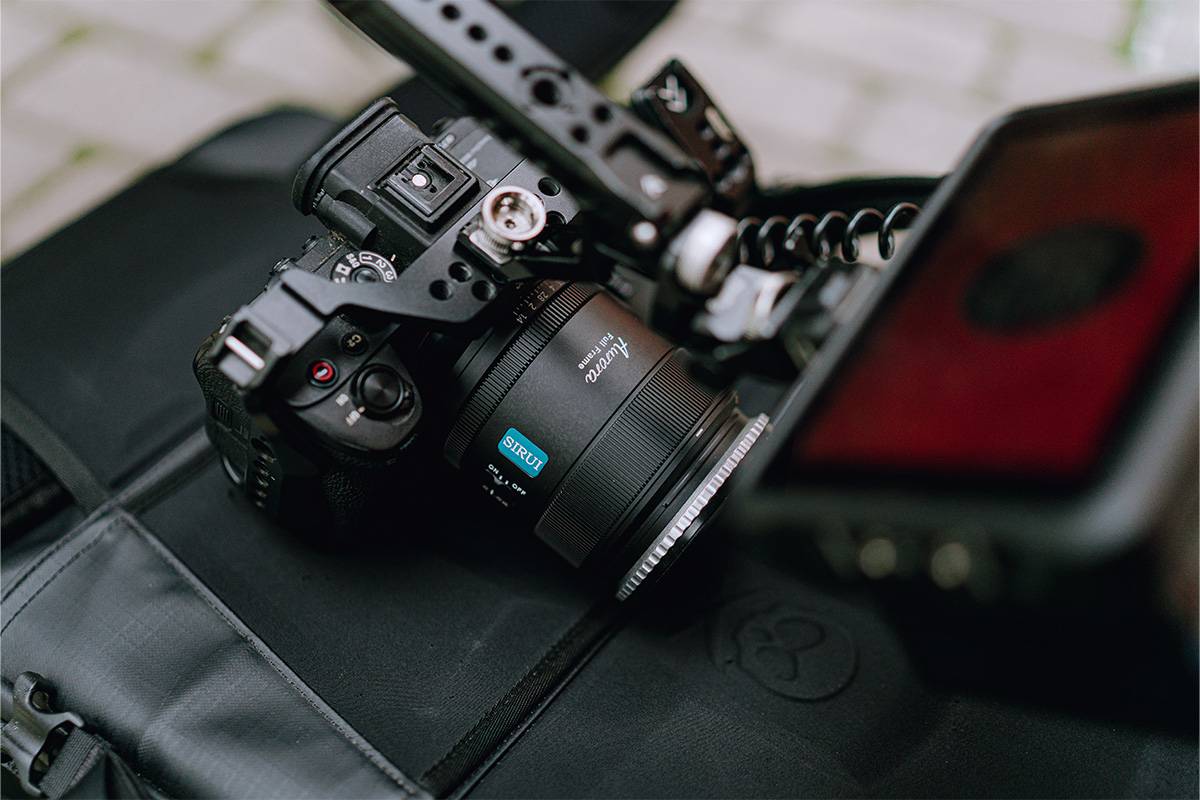
While specialized macro lenses are designed to capture small details, a versatile lens like the SIRUI AURORA Series 85mm F1.4 Full-Frame Autofocus Lens offers photographers a much more practical and enjoyable entry point. This lens was developed for stunning close-ups and, although it is not a true 1:1 macro lens, it is excellent for portraits with dreamy bokeh and high image sharpness.
The lens features an aperture of f/1.4 and, thanks to its next-generation optical formula, delivers razor-sharp photos and videos. Although it is not a true macro lens, it provides impressive color reproduction and sharpness even at f/1.4. It is suitable for macro photography with extension tubes, which allow shorter focusing distances for professional photographers, and for portraits with bokeh in the standard configuration.
Summary:
You now know what a macro lens is. It should be emphasized again that such lenses have a short minimum focusing distance with a high reproduction ratio and are often used to capture tiny details of insects, flowers, and other natural subjects. The SIRUI Aurora lens is an ideal entry point for anyone looking to explore this niche, as it enables stunning close-ups with razor-sharp details.


