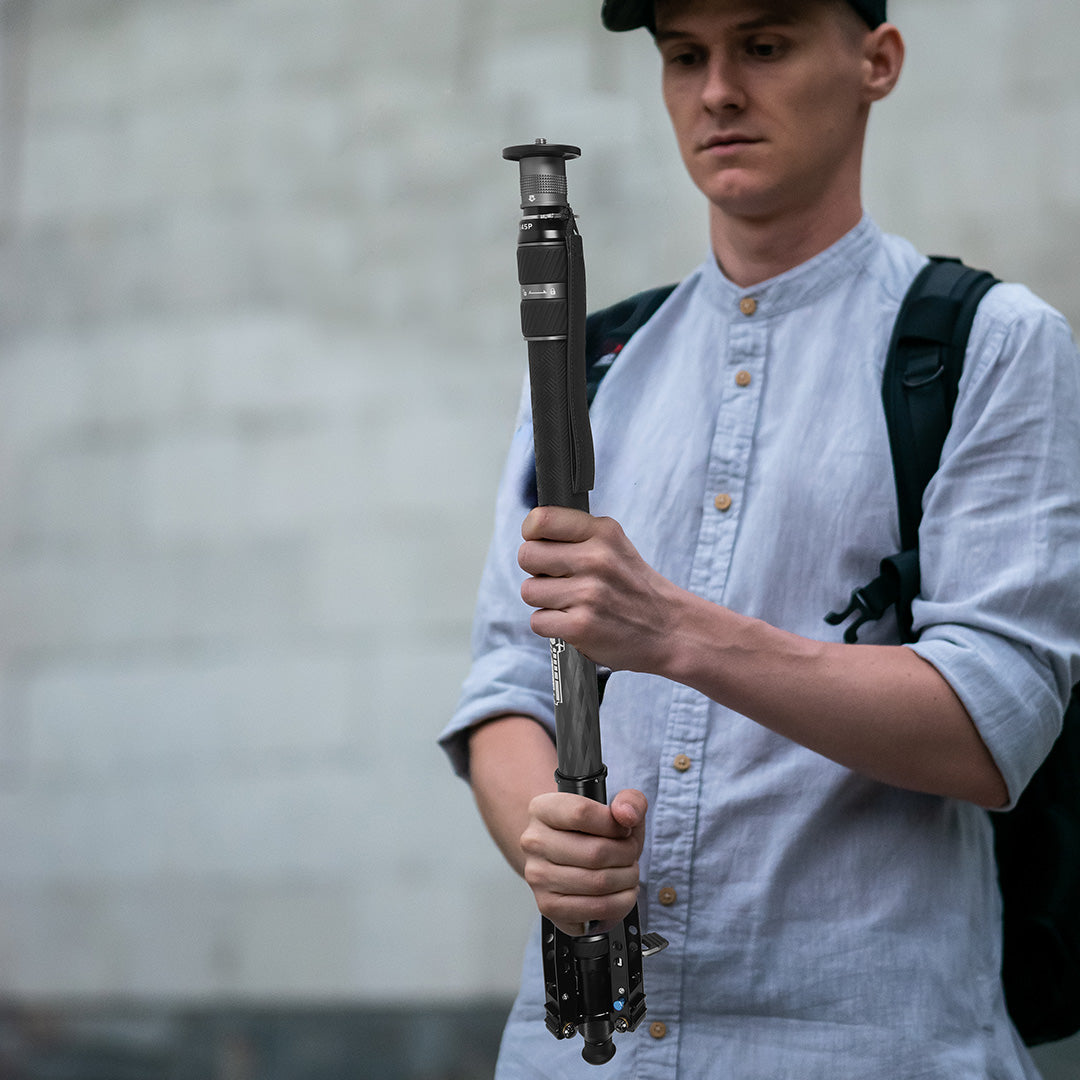
Mastering Stability: The Essential Role of a Monopod in Photography
QBilson |
For many beginners in photography, a monopod may seem more like an optional accessory than a necessity. However, understanding its role can significantly improve the quality of your images. A monopod not only helps keep your camera steady but is an essential tool that promotes precision, creativity, and consistency in your shots.
One of the main advantages of using a monopod is stability. Shakes often caused by hand movements can lead to blurry images, especially in low light or with slow shutter speeds. A stable monopod reduces this problem and allows for sharper, more detailed photographs. This is particularly crucial in long exposure photography, where the camera must remain as steady as possible to capture details in night shots, star trails, or flowing water.
Monopods also offer compositional benefits. By using stable support, you can take the time to carefully compose your shots to ensure balanced compositions and precise alignments. This is especially useful in landscape photography, where small adjustments in framing can make a big difference. Additionally, it allows you to experiment with different perspectives and angles without being limited by holding the camera.
Another key advantage is its role in professional work. Whether in portraits, product photography, or video recording, a monopod provides flexibility. It enables precise adjustments of focus and exposure while maintaining mobility to ensure a consistent visual style across multiple shots. In sports or wildlife photography, the balance a monopod offers is indispensable for smoothly capturing dynamic movements.
For any photographer looking to improve their skills, investing in a high-quality monopod is a decision that pays off in the long run. It opens up new creative possibilities, enhances technical precision, and ultimately leads to more professional results. Whether you’re capturing breathtaking landscapes or detailed macro shots, a monopod is a simple yet powerful tool that every photographer should consider indispensable.